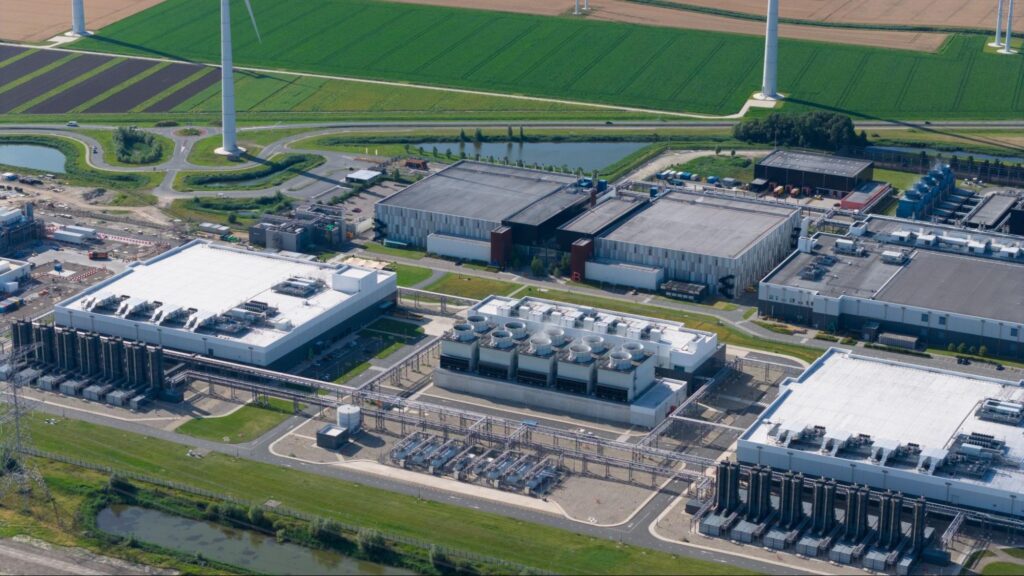
Building Tomorrow: The Role of Civil Engineering for Data Centers
The era of the space race may be fading, but the digital race to artificial intelligence (AI) technology is just beginning. Increasingly sophisticated data centers, with complex site engineering needs, are at the heart of this global competition.
Ambitious data center projects like the $500 billion Project Stargate continue to demonstrate the need for the highest caliber of civil engineering expertise to prepare sites for construction. This demand is intensified by projections that U.S. power consumption will hit record highs in 2025 and 2026, driven primarily by AI data centers.
Project managers often think of electrical, mechanical, or computer engineers when considering data center construction. However, civil engineering is an invaluable and foundational step in the data center construction process, enabling access to power and water, compliant stormwater systems, and resilient, buildable land.
The civil engineering specialists at RETTEW have decades of experience navigating local, state, and federal regulations for site planning, design, and deployment to aid in data center construction. This article explores the foundational role of data center civil engineering in the facility-construction process and provides you with the insights you need to start planning your next project.
How the Right Data Center Civil Engineers Can Transform Your Project
Site selection and infrastructure demands are paramount when designing a data center because of the enormous power and utility requirements. It’s essential to have secure access points, reliable electricity sources, and adequate water for cooling.
A highly effective data center engineering team will guide you through the process from site preparation to land development and stormwater management.
Strategic Planning and Feasibility for Data Center Construction
Before installing complex supercomputers and cutting-edge cooling racks, civil engineers begin with the foundation of every data center project: site assessment.
Data center civil engineers start by assessing your land for several factors:
- Power access
- Fiber connectivity
- Natural disaster risk
- Water access
- Local climate conditions
Experts have coined the term “powered land” to refer to sites that have access to large, utility grade power capacity in the 250- to 500-megawatt range for developing data centers. In fact, experts predict data center electricity usage will surge to 6.7%–12% of all U.S. consumption by 2028. Unfortunately, this demand has quickly become a bottleneck. Why?
The demand for AI workloads has outpaced the speed of electrical infrastructure construction, creating scarcity. Civil engineering experts can help assess sites and advise you on whether to develop a greenfield site or purchase and retrofit an existing facility.
For example, it’s vital to consider services like GeoEnvironmental and Subsurface Utility Engineering (SUE) to ensure the property meets industry standards for quality and to avoid costly surprises from buried utilities.
Once engineers establish feasibility, the next step in data center consultation is to create an action plan for land and stormwater management.
Key Land Management Considerations
After signing off on feasibility, attention shifts to the land itself. Engineers and stakeholders will collaborate to verify the site’s zoning, services, and existing infrastructure can support large-scale power and cooling demands.
1. Zoning and Land Use Regulations
Data centers often have unique, highly specific zoning classifications because of their high energy and water consumption. In 2023, more than $64 billion in U.S. data center projects were blocked or delayed due to local land use challenges. Navigating these regulatory obstacles requires specialized expertise; partnering with a local engineering firm familiar with regional zoning codes, permitting processes, and regulatory decision-makers can be critical to successfully advancing a project through municipal approval stages and avoiding costly delays.
2. Infrastructure Demands
The Department of Energy (DOE) projects data center electricity usage could more than double by 2028. Engineers must determine if the local power grid can sustain a data center’s high energy load and if adequate water is available for cooling systems.
3. Environmental Impact
Environmental considerations are another essential factor for data center civil engineers.
Experts perform environmental site assessments, including soil and subsurface analysis, stream/wetland mitigation, and geophysics studies to help ensure the land is ready for development.
4. Community Engagement and Opposition
One of the main socioeconomic factors to evaluate is community pushback related to energy use, land use, and visual impact. Proactive community engagement can mitigate these risks, as public opposition has delayed or altered several major U.S. data center projects. Local experts can be critical partners in addressing community concerns and building stakeholder buy-in.
5. Site Selection and Planning
Site selection requires a comprehensive strategy that considers energy availability and infrastructure costs. Because utility lead times have increased, rural markets with nearer-term power availability have become increasingly attractive to developers.
Key Stormwater Management Practices for Data Center Design
Managing stormwater effectively is a proactive approach to mitigate risk in the land development process. Large impervious surfaces, high cooling demands, and continuous operations make these facilities vulnerable to flooding and erosion.
Managing stormwater effectively is a proactive approach to mitigate risk in the land development process. Large impervious surfaces, high cooling demands, and continuous operations make these facilities vulnerable to flooding and erosion.
There are several key stormwater management tips engineers can put into practice for data center design:
- Storm Drains and Retention Ponds: Designing a storm drain or retention pond is essential to collect water and redirect runoff to avoid pooling and erosion.
- Green Infrastructure: Practices like bioretention basins, permeable pavements, vegetated swales, and green roofs help to manage stormwater and enhance the aesthetics of your site.
- Resilience and Operational Reliability: Stormwater systems must perform under extreme conditions with testing to withstand 100-year storm events and prevent surface flooding near power and cooling infrastructure. Systems should also maintain redundant flow paths in case of system overload.
- Smart Monitoring and Adaptive Management: Real-time monitoring technology can allow engineers to track water levels, flow rates, and system performance during a storm. These controls can adjust flow valves and often flag maintenance requests before a crisis strikes.
Whatever your unique landscape, a skilled stormwater engineer can use these techniques to help mitigate flood risk. Explore RETTEW’s stormwater services to learn more about how you can partner with us to design a sturdy and redundant infrastructure for flood management.
How to Find a Partner for Your Data Center Site Planning Project
Whether you’re a developer, investor, or operator, finding a partner you can trust for your project can make or break success. Here at RETTEW, we have more than 50 years of experience helping clients transform their vision into a profitable reality through large-scale industrial projects.
We’re a fully integrated data center consultation partner, from site design to environmental compliance, surveying, GIS, geophysics, utilities, and more. We’ll walk with you through every step of the process from site development to construction, helping you maximize efficiency and hit project deadlines.
Our team has in-depth, hands-on experience with large-scale industrial development projects and maintains established relationships across Pennsylvania, Ohio, and West Virginia. We leverage our connections with local boards, utility providers, and regulatory agencies to secure the necessary environmental and infrastructure approvals for your project.
Choose the Data Center Civil Engineering Partner for Your Next Project Today
RETTEW’s experience spans every aspect of the data center development process. We do more than just deliver a design—our multidisciplinary team has the technical insight and regulatory expertise to position your project for long-term success.
Ready to discuss your site-planning or civil engineering needs? Get connected with our market lead today to build a customized approach that aligns with your project’s power demands, regulatory requirements, and sustainability goals.
Joel Young Market Lead, Development
📞 Call: 1-800-738-8395
📧 Email: jyoung@rettew.com
Joel Young
Contact


