
How Data Centers Are Rewriting the Rules for Electrical Infrastructure
The electric grid was already under pressure long before data centers emerged as a major demand driver. What we’re seeing now, across the utility and infrastructure projects RETTEW supports in this region, is a demand curve that has fundamentally changed the equation.
Data centers are just one form of that digital infrastructure, alongside cloud computing platforms, healthcare networks, financial systems, and the growing demands of AI. For utilities and municipalities supplied by PJM Interconnection, the regional transmission organization managing the grid across thirteen states and jurisdictions in the Mid-Atlantic and Midwest, the distinction matters less than the reality. These loads are arriving, they are large, and the grid receiving them was built for a different era entirely.
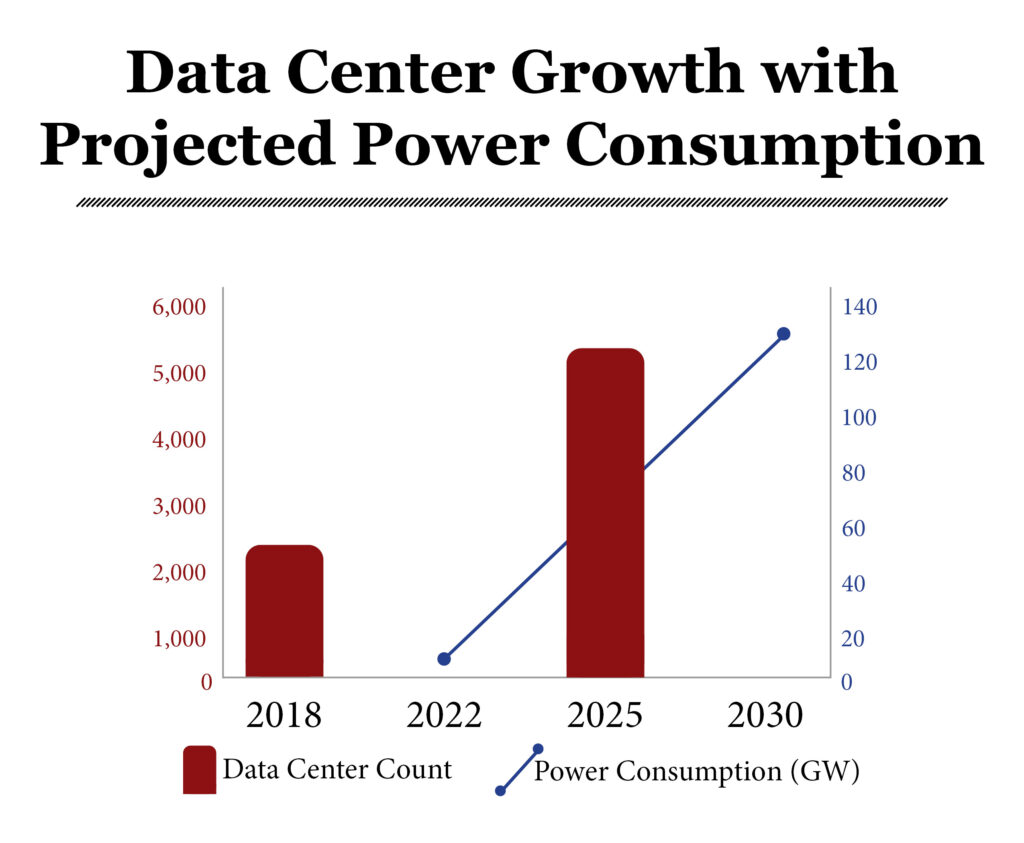
In 2018, there were just 2,600 data centers in the U.S. By 2025, that number had grown to over 5,400. Much of this growth is being driven by hyperscale companies including Amazon, Microsoft, Google, and Meta, whose AI and cloud computing operations are generating a level and consistency of demand that simply didn’t exist when this infrastructure was built. These facilities consumed about 17 gigawatts of power in 2022, and by 2030, analysts project demand could reach between 35 and 130 gigawatts depending on how aggressively the sector grows.
Artificial intelligence is the primary accelerant. As generative AI models scale and cloud computing expands, large-scale data centers can draw as much electricity as small cities, and their clustering in specific regions creates grid impacts that ripple well beyond the facility fence line. For Pennsylvania, Ohio, and West Virginia, this isn’t a distant concern. PJM’s 2025 Long-Term Load Forecast projects a peak load growth of 32 gigawatts between 2024 and 2030, with data centers being responsible for 94% of that increase.
Much of the new data center capacity being planned is concentrated in Virginia, Pennsylvania, Ohio, Illinois, and New Jersey, all within PJM’s territory. That concentration matters more than most people outside the industry realize. A new 100-MW facility arriving in a region where substations are decades old and transformers are already on backorder doesn’t just stress the local grid. It can require a coordinated series of upgrades across the local system, work that takes time, resources, and planning that benefits the broader community well beyond the facility itself.
Some of the largest data center players are not waiting for utilities to solve the problem on their own. Hyperscale companies have begun funding transmission upgrades, securing long-term power purchase agreements, and in some cases exploring dedicated generation resources, including on-site power and small modular reactors, to reduce their dependence on grid capacity that may not arrive on their timeline. The scale of their demand gives them both the incentive and, in many cases, the financial resources to pursue options that most commercial customers cannot.
From the interconnection work RETTEW supports across the PJM region, connecting a new data center to the grid is not as simple as building the facility and requesting service. Most large load projects require a series of utility studies to assess the impact on the existing system, followed by infrastructure upgrades, which can include new substations, transmission lines, and feeder circuits, that must be planned, permitted, and constructed before power can be delivered. That process routinely takes years, and interconnection wait times have more than doubled over the past fifteenyears, with projects now spending an average of five years in the queue before reaching commercial operation.
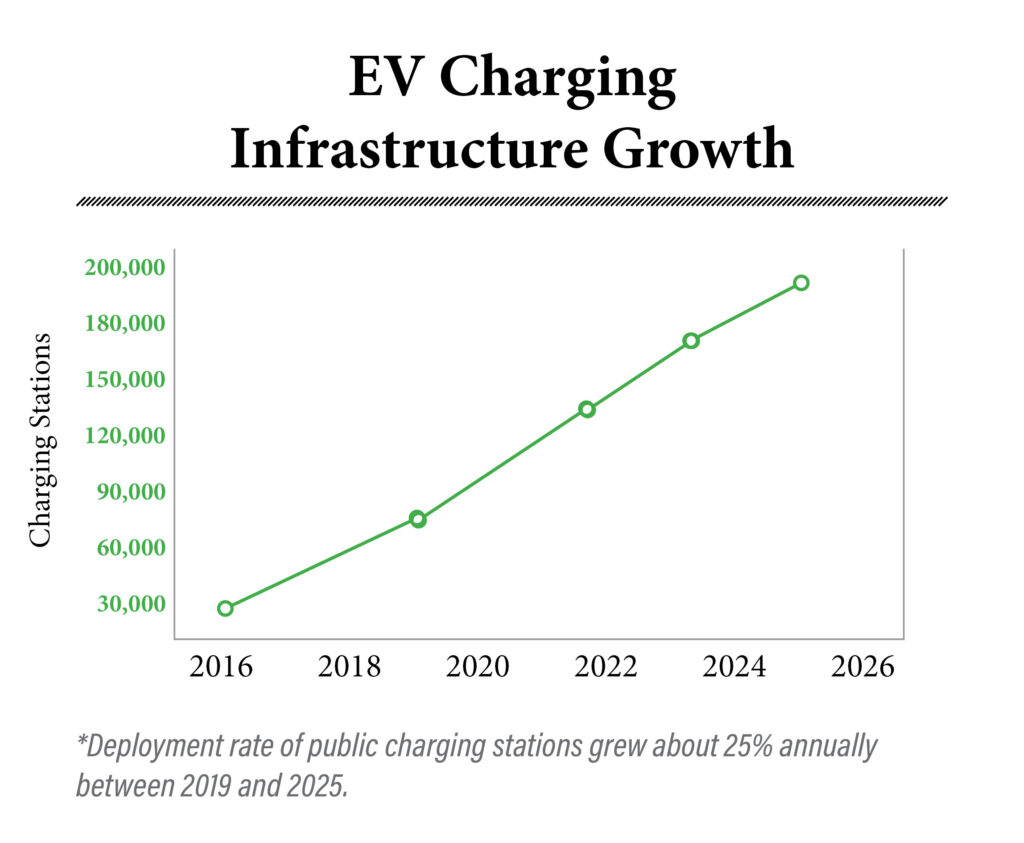
Data centers are the dominant source of new large-load growth in this region, but they are not the only one. Electric vehicles are adding uneven, distributed demand pressure across local distribution networks, and the broader electrification of heating systems and industrial processes is contributing load growth that compounds the data center effect. The grid is now carrying the combined weight of demand forces that were never anticipated together, let alone planned for.
The implication for utilities is significant. Demand is arriving faster than the existing frameworks were designed to absorb, and it’s arriving on top of infrastructure that was already showing its age. That gap between what the grid was built for and what it’s being asked to do is where the real engineering work begins.
Additional reading: World Resources Institute: Powering the U.S. Data Center Boom | PJM Board Large Load Integration Plan
Cory Heller
Mr. Heller is the Utilities Market Lead for RETTEW and has close to ten years of experience. He has a rich background in subsurface utility engineering (SUE) technology and has acquired proficiency in the intricate fieldwork that underpins SUE operations. Throughout his career, he has amassed an understanding of utility systems, honed through hands-on experience and a steadfast commitment to delivering high-quality work. Through client interactions and leadership roles, he has refined his expertise across various facets of utility management including SUE, surveying, quality control, and project management, which he uses to foster and maintain client relationships within the utility sector for RETTEW.
Contact


